
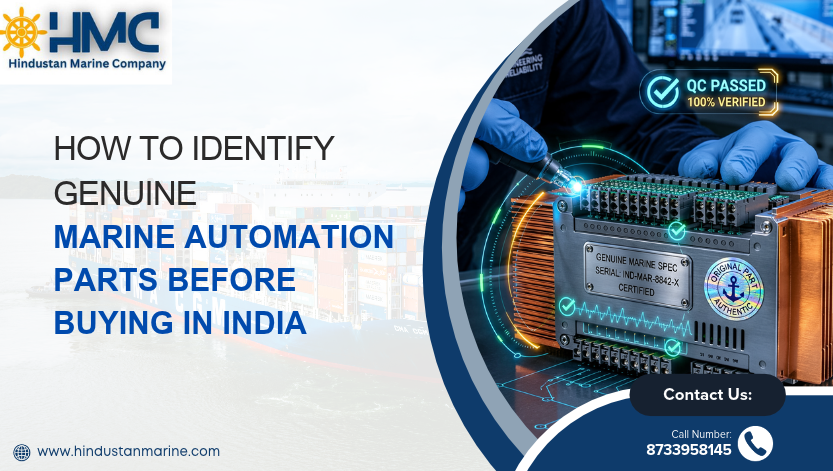
Marine automation systems have great importance in ensuring the safe operation of vessels and offshore machinery. From programmable logic controllers (PLCs) to printed circuit boards (PCBs) and sensors, every component must work correctly to avoid unexpected breakdowns.
That is when buyers realise how much a replacement part matters. The Indian market has OEM parts, compatible aftermarket options and copies that look almost real. Telling them apart is not always easy.
Buying genuine marine automation parts is about more than a brand name. It protects your equipment, cuts downtime and keeps the crew safe. So how do you check a part before you pay? Let’s walk through it.
What Are Genuine Marine Automation Parts?
Genuine marine automation parts are original components made by the OEM, or supplied through its authorised network. They are built to match the exact specifications of your system.
Common examples:
- PLCs and controllers
- PCBs for alarm panels
- Pressure, temperature and level sensors
- HMIs and relays
- Communication and power modules
Because the maker tests these parts, compatibility is easier to confirm on paper. You also get traceability if something goes wrong later.
A genuine part does not guarantee a perfect installation. But it gives you a much stronger starting point.
How to Verify OEM Part Numbers and Serial Numbers
Every original component carries identification details. They link the part to its maker, model and production batch. Checking them takes a few minutes and can save you a lot of trouble.
Run through these steps:
- Match the part number
- Read the serial number
- Ask the OEM
- Check revisions
- Compare specifications
Say a vessel in Mumbai needs a replacement PLC module. The brand name alone tells you very little. The part number, hardware revision and system compatibility all have to line up.
Ask the supplier for clear photos of the real label. Then confirm the details with the OEM or an authorised distributor.
One warning: a matching number is only a first check. Counterfeiters can copy labels and serial numbers too.
How to Identify Counterfeit PLCs, PCBs and Sensors
Fake components are hard to spot because the packaging often looks convincing. Still, a few signs tend to give them away.
Watch for:
- Faded or uneven labels
- Broken seals
- Sanded markings
- Messy soldering
- Loose connectors
- Mismatched datasheet ratings
- Unusually low price
A PLC may carry the right logo but have a different connector layout. A refurbished PCB may be sold as brand new. Both happen more often than buyers like to admit.
Your eyes can catch red flags, but they cannot prove authenticity alone. If the source feels shaky, get the part inspected or verified by the manufacturer before you install it. Checking markings, packaging and shipping records when the goods arrive is a good habit for any electronic purchase.
OEM vs Aftermarket Marine Parts: What Is the Difference?
Not every non-OEM part is a fake. Aftermarket parts come from independent makers and can be a sensible option when the original is unavailable.
| Factor | OEM parts | Aftermarket parts |
| Maker | Original manufacturer | Independent manufacturer |
| Compatibility | Built for your system | Depends on specifications |
| Documents | OEM documentation | Supplier documentation |
| Warranty | OEM terms | Maker’s terms |
| Price | Usually higher | Often lower |
For critical engine control, alarm or safety systems, OEM parts are usually the safer pick because compatibility is easier to verify. Aftermarket parts work when they show proven compatibility, traceable manufacturing, approvals where needed and a reliable warranty.
Do not assume aftermarket means unsafe. And do not assume an expensive OEM-labelled part is real. Verify both.
What Documents Should You Request Before Purchasing?
Paperwork makes verification easier. A good supplier will share it without fuss.
Ask for:
- Certificate of Conformity
- Proof of procurement
- Product datasheet
- Warranty terms
- GST tax invoice
- Serial number photographs
- Test reports
On the GST invoice, check the supplier’s legal name, GSTIN, product description and value. For e-invoices, you can verify the QR code on the government’s invoice verification facility.
Test reports matter most for used, refurbished or critical electronics. And remember that documents can be copied too, so cross-check important ones with the issuing manufacturer.
How to Choose a Reliable Marine Automation Parts Supplier in India
Buyers in Mumbai, Chennai, Kochi, Visakhapatnam and Mundra often need parts in a hurry. But speed should never replace checking.
Look for:
- Marine automation experience
- Clear sourcing
- Verified business details
- Technical knowledge
- Honest quotations
- After-sales support
Ask direct questions. Does the part come from the OEM, an authorised distributor or the open market? Check the supplier’s GST registration, address and track record.
Compare quotes on condition, origin, warranty and paperwork, not only price. A dependable supplier answers technical questions comfortably and shares documents without being chased.
Common Mistakes to Avoid When Buying Marine Automation Parts
Even experienced purchasers make mistakes. Do not do these:
- Rely on brands only
- Neglect updates
- Take certificates for granted
- Purchase refurbished items as new
- Pay full purchase price in advance
- Ignore warranty information
- Install without inspection
A little extra time at purchase can prevent repairs, failures and delays later.
Frequently Asked Questions (FAQs)
1. How to identify real marine automation parts?
Compare part number, serial number, labels and packaging to OEM details. Request documents and verify with the manufacturer or an authorised distributor.”
2. Are aftermarket parts reliable for marine automation?
Yes, if parts are from a recognised maker and match your technical specifications. Check compatibility, approvals and warranty first.
3. Can fake PLCs and PCBs look original?
Yes, quite easily. Copied logos and serial numbers are common, so also check soldering, layout and packaging.
4. What documents to check when buying marine spares in India?
Get a Certificate of Conformity, datasheet, GST bill, warranty and test reports. Confirm the essential ones with the source.
5. Why purchase marine spares from a reputed vendor?
A reputed vendor minimizes the probability of counterfeit products and mismatched specifications. Sourcing records make future spare part replacements hassle-free too.
Conclusion
Buying marine automation components takes more than a brand check and a price comparison. Verify the identification, specifications, documents and the supplier before you place an order.
With genuine parts, your equipment is sure to be safeguarded against any risk of damage or malfunctions. Whether it’s a PLC, PCB or sensor, make authenticity and fit your first priority.
Need quality parts? Visit Hindustan Marine. All you need to do is provide your part number along with other specifications.



 Fast Delivery
 Easy Returns
 Instant Quote
 Product Demo