
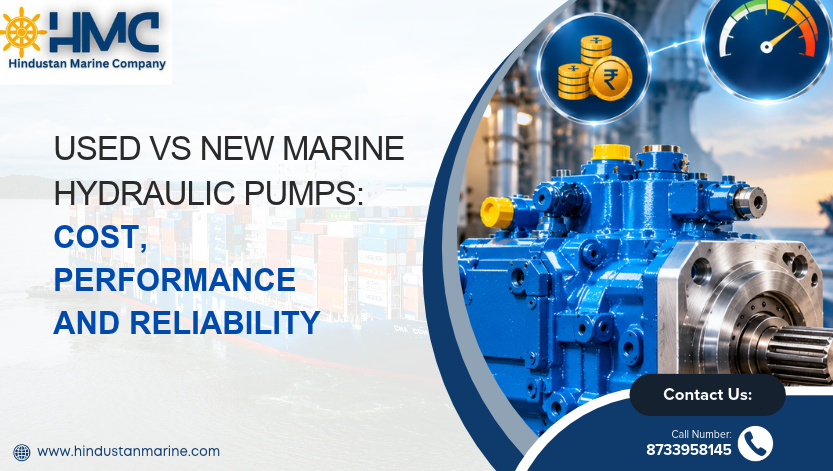
Hydraulic pumps on marine vessels have a key role in maintaining their function. They are the source of hydraulic energy that is used to drive steering mechanisms, deck cranes, winches, and hatch covers, among other machines. Failure of the pumps may affect the operation process and bring about costly repairs.
So the big question comes up fast: buy new or go for used marine hydraulic pumps?
Both can work. New pumps bring factory backing, while a properly tested used pump can do the same job for much less. Let’s compare used and new marine hydraulic pumps and understand the cost performance and reliability.
1. Used vs New Marine Hydraulic Pumps: Key Differences
The real difference is history. A new pump has none. A used pump has already worked somewhere, maybe for years.
| Factor | New Pump | Used Pump |
| Cost | Higher | Lower |
| History | None | Varies by vessel |
| Performance | Factory specification | Depends on wear |
| Availability | May take weeks | Often in stock |
| Warranty | Manufacturer-backed | Supplier-defined |
| Maintenance | Minimal at first | May need parts |
Take a cargo vessel on regular routes. For main steering, new is the safer choice. But for a crane pump on an older coaster, or a standby unit, a tested used pump makes good sense.
Decide on suitability first. Price comes second.
2. Are Used Marine Hydraulic Pumps Reliable?
Yes, they can be, if they are inspected, tested and maintained well. Many pumps come off vessels during recycling or machinery upgrades with plenty of life left.
But how the pump worked before matters a lot. Ask about:
- Operating history: hours and duty
- Physical condition: housing, shaft, mounts
- Internal wear: scoring, corrosion, clearance
- Past repairs: what was replaced
A pump with no clear history is a gamble. Always go for tested units that provide you with technical information.
3. Performance Testing Before Buying a Used Pump
A well-cared-for pump may not be effective; internal leakage may occur. Proper testing is the only way to tell.
Pressure and Flow Testing
This confirms whether the pump can deliver the hydraulic output your system needs. A pump may build good pressure but still give weak flow, so check both.
- Maximum pressure: compare with specification
- Flow output: at rated speed
- Pressure stability: under changing loads
- Internal leakage: unusual pressure drops
Performance Under Load
Test the pump at the right speed and oil temperature. A pump that runs fine without load can show low flow once pressure builds. Wrong test conditions give misleading results.
Noise and Vibration Checks
Whining, rattling or shaky shaft movement often points to bearing damage, misalignment or wear. Sort these out before installation, not after.
4. Inspect Seals, Bearings and Internal Components
Seals and bearings decide how long a pump lasts. A bad seal leaks oil. A worn bearing causes noise and shaft misalignment.
- Seals and O-rings: cracks, hardening, leaks
- Bearings: rough turning, play
- Shaft and housing: scoring, rust, cracks
- Internal parts: gears, pistons, valve plates
Replacing seals and bearings during refurbishment adds real reliability. But damaged internal parts may need a bigger repair, so ask what was actually done.
5. When Should You Buy Refurbished Marine Hydraulic Pumps?
Refurbished pumps help when the original model is costly, hard to find or discontinued. A new import can run into several lakh rupees, so the saving can be serious.
Consider refurbished when:
- Model discontinued: no new stock
- Time is short: vessel waiting
- Budget is tight: new exceeds allowance
- Specifications match: exact equivalent
- Records available: tests and inspection
Shipowners and repair yards sourcing through the Alang and Bhavnagar marine equipment market often find reusable pumps from recycled vessels.
But refurbishment means more than cleaning and repainting. Worn parts must be tested, changed where necessary, and the final product checked to ensure it meets the required standards before delivery.
6. Warranty and Supplier Reliability: What Matters?
New pumps have warranties from their manufacturers. The warranties for used and refurbished pumps depend on what the supplier provides.
- Duration: how many months
- Coverage: parts and labour
- Early failure: what happens
- Test reports: provided or not
- After-sales support: technical help
Marine Hydraulic Pump Supplier Checklist
- [ ] Make, model and part number confirmed
- [ ] Pressure, flow, displacement and RPM matched
- [ ] Shaft rotation and mounting checked
- [ ] Photos and inspection details received
- [ ] Pressure and flow test results shared
- [ ] Seal and bearing condition verified
- [ ] Warranty and return terms understood
- [ ] Delivery time and packing confirmed
A dependable supplier answers technical questions clearly. They do not just push the lowest price.
7. Common Mistakes to Avoid When Buying Used Pumps
Even experienced buyers make these mistakes:
- Buying based on price alone: inexpensive pump with lots of wear becomes expensive in the long run.
- Overlooking specifications: two seemingly similar pumps can be rated differently for flow and pressure.
- Not conducting performance tests: the new pump may have internal leaks.
- Failing to conduct compatibility test: mounting, shaft, and rotation must match.
- Accepting vague warranty terms: if it is not written, it does not exist.
A few checks now can save days of downtime later.
Frequently Asked Questions
1. Are used marine hydraulic pumps worth buying?
Yes, when the pump is genuine, compatible and backed by proper inspection and testing. Without those, the savings can disappear quickly.
2. How much cheaper are used marine hydraulic pumps than new ones?
There is no fixed gap. Price depends on make, model, condition and refurbishment work. Get quotes for both new and used before deciding.
3. How can I check the performance of a used hydraulic pump?
Check pressure, flow rate, speed, oil temperature, leakage, noise and vibration. Compare every reading with the manufacturer’s specifications.
4. Is a refurbished pump better than a used pump?
Often yes, because worn parts are repaired or replaced. But quality depends on the refurbishment work and the final test.
5. What should I check before buying used marine hydraulic pumps in India?
Verify make, model, specifications, condition, seals, bearings, test results, warranty and the supplier’s credentials.
Conclusion
Choosing between new and used marine hydraulic pumps takes more than comparing prices. New pumps suit critical systems where factory support matters most. A tested, refurbished pump can be a smart, cost-effective choice for everything else.
The key is simple: verify specifications, inspect seals and bearings, and ask for real pressure and flow reports.
Looking for reliable marine machinery? Hindustan Marine supports sourcing of used, reusable and refurbished ship machinery and spares.


 Fast Delivery
 Easy Returns
 Instant Quote
 Product Demo