
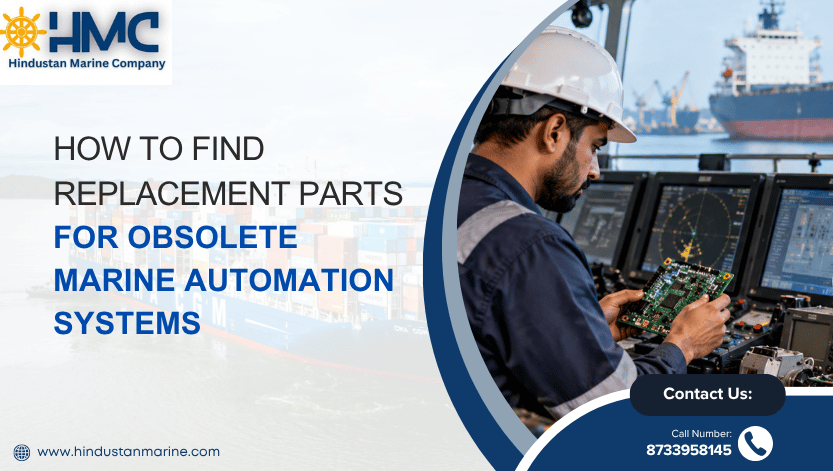
The marine automation systems are used to control the engines, monitor machinery, and provide alarm management in ships. But many ships utilise obsolete programmable logic controller systems (PLCs), human-machine interfaces (HMIs), and printed circuit boards (PCBs) that manufacturers no longer produce.
Searching for obsolete marine automation parts is quite difficult, particularly where a vessel relies on such a particular part to ensure reliable functionality. In searching for an appropriate replacement part, you not only need to find one that matches the model number but also other factors.
This guide explains how to identify discontinued components, compare replacement options and source suitable marine spare parts in India without creating unnecessary risks or delays.
What Are Obsolete Marine Automation Parts?
Obsolete marine automation parts are components the original manufacturer (OEM) no longer makes, sells or supports. They may still work perfectly. The trouble starts when one fails and no easy replacement exists.
Common examples:
- PLC CPUs and cards
- HMI touch screens
- Control PCBs
- Sensors and transmitters
- Communication modules
- Power supply units
“Obsolete” doesn’t mean “dead”. A well-kept unit can run for years. But it helps to know where you stand before it fails.
Why Do OEMs Discontinue Marine Automation Components?
It’s usually not about your ship. Electronics move fast, and marine is a small market for most controller makers.
Typical reasons:
- Chips go out of production
- Newer models arrive
- Support becomes expensive
- Demand drops
- Software loses support
Sometimes a maker simply can’t buy the tiny parts needed to build the old board. Other times, supporting a 20-year-old controller just isn’t worth the effort.
For Indian owners, this means a sound vessel can wait weeks at port for one failed board. Planning ahead beats searching in a panic.
How to Identify Discontinued PLCs, HMIs and PCBs
Before searching for obsolete marine automation parts, be sure what you actually have. A wrong guess wastes money and time.
Note down the details. Check the nameplate and write down the brand, model, part number, serial number and hardware revision. Two PLCs from one family can look identical but differ in ports or firmware.
Check the OEM’s status. Look at the manufacturer’s website or ask their support team whether the part is active, discontinued or end-of-life. Don’t trust a seller’s “in stock” tag alone. It doesn’t prove the part is genuine or suitable for marine use.
Gather system details. For PLCs, note the I/O setup, power supply, software and protocols. For HMIs, note screen size, resolution and operating system. For PCBs, record connectors, voltage ratings and board revisions.
One small tip: take clear photos of the unit and its wiring before touching anything. A good photo helps a supplier match the part much faster.
How to Find Compatible Replacements
A part that looks the same may not behave the same. Check these points:
- Voltage and current
- Signal types
- Communication protocols
- Firmware and software
- Marine environment ratings
- Fit with existing system
Have a qualified marine automation engineer review the replacement before it goes onboard. The goal is to restore the original function, not to add new surprises.
Refurbished vs Alternative Marine Automation Parts
When the original is gone, you usually have two choices.
| Factor | Refurbished | Alternative |
| Compatibility | Easier if identical | May need configuration |
| Availability | Limited stock | Depends on options |
| Testing | Quality varies | Needs integration testing |
| Installation | Few changes | May need engineering |
| Main concern | Hidden wear | Integration errors |
Refurbished units suit cases where the system must stay unchanged. Ask whether the unit was inspected and tested and whether it comes with a warranty.
Alternatives can offer better long-term support. But count the engineering, programming and commissioning costs too. Compare the full cost, not just the price tag.
Risks of Replacing Legacy Marine Automation Components
A change in one component will have an effect on the entire system. Be careful about:
- Unexpected shutdowns
- Configuration loss
- Loss of communication
- Non-compliance
- Difficulty troubleshooting in the future
Make sure you have backups before removing a functioning unit. Photograph the wiring and terminals.
After fitting the new part, test alarms, interlocks and key functions, then update your records. If the equipment is class-approved or safety-related, follow your vessel’s procedures and class requirements before changing anything.
How to Source Obsolete Marine Spare Parts in India
India has a solid marine supply network. Suppliers around Mumbai, Chennai, Kochi and Visakhapatnam often help trace older automation equipment. A simple process works best:
- Share exact part details
- Ask for traceability
- Compare quotations properly
- Confirm shipping and paperwork
- Ask about future support
Send the brand, model, part number and photos. Ask where the part came from and whether it was tested. Look beyond price, because delivery time, warranty and support matter too.
Prices vary a lot with rarity, condition and urgency. Ask for a written quote in INR and confirm whether testing, shipping and GST are included. Check the supplier’s business details before paying. And don’t pay extra just because someone calls a part “rare”.
Common Mistakes to Avoid
- Buying by appearance
- Ignoring software compatibility
- Skipping testing
- Waiting for failure
- Missing documentation
A small habit helps here. Keep a list of ageing components and note a backup source for each. When something fails, you aren’t starting from zero.
Frequently Asked Questions
1. What are obsolete marine automation parts?
They are marine automation control parts like PLC, HMI, and PCB, which are not anymore made by the manufacturers. Some can still function, but spare parts and technical assistance are more difficult to get.
2. Can obsolete marine automation parts be repaired?
Yes, they are. Repairing depends on the availability of parts, technical data available, and the safety criticality of the part itself.
3. Are refurbished marine automation parts reliable?
They can be if the supplier inspects, tests and gives a warranty. Just remember that refurbished doesn’t guarantee the service life of a new part.
4. How do I check if a replacement PLC is compatible?
Compare power supply, I/O needs, protocols, firmware and programming software. Let a qualified engineer verify it before installation.
5. Where can I source obsolete marine automation parts in India?
Try specialist marine suppliers and electronic repair providers in Mumbai, Chennai, Kochi and Visakhapatnam. Hindustan Marine is another option. Always verify part number, condition, test records and warranty.
Conclusion
Dealing with obsolete marine automation parts gets easier when you identify the part correctly, check compatibility and choose between refurbished and alternative options with the full cost in mind.
For Indian operators, early planning means lower emergency costs, less downtime and safer maintenance.
Need help tracing a hard-to-find component? Contact Hindustan Marine with the make, model, part number and photos of the unit.



 Fast Delivery
 Easy Returns
 Instant Quote
 Product Demo